Drink unfiltered, finely ground coffee until only the grounds remain. Place the saucer on the cup, make three circles while holding a good thought, and turn it over quickly. Let the cup cool and drain for a few minutes — then the picture opens up.
The zones of the cup
The handle stands for you and your home; the side opposite for strangers and far places. The rim shows what is near and the near future, the base shows what is deep — the past and your roots. Signs close to the handle concern you most directly.
Time & proximity
The higher a sign sits, the sooner it happens; the lower, the more distant. Large, clear shapes are strong; small, scattered dots are only hints. Light areas count as favourable, dark dense clumps as challenging influences.
How it is interpreted
A reading is not a lookup but a storytelling: the signs are read in context — by place, size and neighbourhood. The same shape means different things depending on the school and the context. That is why comparing the traditions is worthwhile.
The reading traditions
Ottoman-PersianPoetic and fate-oriented: rim = near future, base = roots; signs like road (kismet), bird (news), fish (abundance).
Ottoman–Persian coffee reading (fal, tasseografi) grew in the coffeehouses of Istanbul and the courts of Persia. It is poetic and threaded with belief in kısmet (what is allotted) and nasip (what is destined). The small mocha cup (fincan) and its saucer are read; the interpretation is warm, hopeful and richly pictorial, often closing with a blessing.
Russian-BulgarianIntuitive and narrative: large clear shapes = strong influences; horse (travel), dog (friend), ring (marriage), cross (caution).
The Russian–Bulgarian coffee oracle (гадание на кофейной гуще) thrives on intuition and narrative. The cup is upturned onto the saucer; one reads figures, animals and scenes that form a little story. The tone is vivid, emotional and close to daily life — love, travel, family and friendship take centre stage.
German / Central-EuropeanHomely and pragmatic: letter = news, house = home, ring = marriage, dog = friend; from the Viennese coffeehouse and folk tradition, fate-light.
Central-European coffee-ground reading — in the German-speaking world simply “Kaffeesatz lesen” — grew in the Viennese coffeehouses and bourgeois parlours of the 18th and 19th centuries. It is homely, pragmatic and close to daily life: letters, visitors, the house, marriage and small journeys. The tone is warm and folksy, its imagery akin to the Lenormand fortune cards — less fate, more hearth and home.
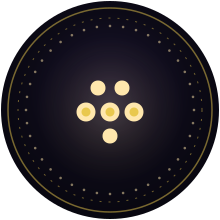
The anchor promises firm ground beneath your feet: steadiness, shelter and a bond fate will not easily undo.
Where it sits in the cup
Near the rim a situation soon steadies; at the bottom the constancy roots deep and lasting; by the handle it anchors your home and love, opposite it finds its hold far from home or in foreign lands.
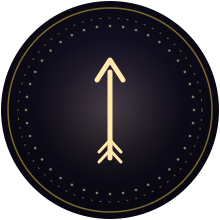
The arrow points to a sudden event and a heart fixed upon a single aim; perhaps a lover's gaze, drawn taut as a bowstring, rests upon you.
Where it sits in the cup
At the rim the news or event arrives very soon; at the bottom it works slower and deeper; if the tip turns toward the handle it aims at you and your home, if away, the impulse comes from strangers or afar.
The bee promises that toilsome, patient work will at last bear sweet fruit; what you gather drop by drop becomes your honey, the reward of diligence.
Where it sits in the cup
At the rim the reward of work draws near; at the bottom it ripens from long, steady effort, near the handle diligence blooms in home and family, and opposite the good earnings come from afar.
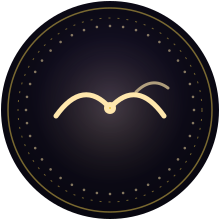
A bird in the grounds carries glad tidings upon its wings; a messenger draws near, a long-cherished wish ripens toward its destined hour, and two birds double the blessing.
Where it sits in the cup
Near the rim the bird's news comes swiftly, at the bottom it concerns a distant or long-awaited matter; by the handle it speaks of you and your home, opposite it of strangers or a journey afar.
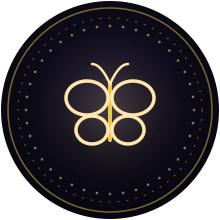
The butterfly brings a light, shimmering joy and a tender transformation; yet like a love that blooms swiftly and fades just as fast, hold this fleeting moment gently, not too tightly.
Where it sits in the cup
At the rim joy comes fluttering soon; at the bottom it means a deeper, slower transformation, near the handle the butterfly touches your heart and home, and opposite the light encounter arrives from afar.
The camel heralds a marriage or a proposal and a fortune as enduring as its patience; what you bear with steadfastness will ripen into a lasting blessing.
Where it sits in the cup
At the rim the camel promises a betrothal or journey soon; deep at the bottom it means a long-carried burden that finally pays off, and near the handle the blessing enters your own home.
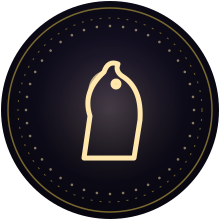
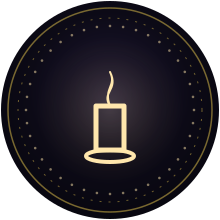
The candle whispers of a wish that comes true through patience, and of a light rising within — a new thought, a clear insight.
Where it sits in the cup
At the rim the wish is fulfilled or help arrives soon; at the bottom the insight ripens slowly and deep; by the handle the candle lights your own heart and home, opposite it the light — or the comfort — comes from strangers.
The cat is an enemy in a friend's guise, a sign of disloyalty and hidden intent; beware deceit or an estrangement with someone you love.
Where it sits in the cup
Near the rim the cat's falseness threatens soon, at the bottom it is an old, smouldering mistrust; by the handle the cunning comes from your near circle, opposite it from a stranger or distant person.
A cloud is a passing shadow over your heart, a grief that longs for tears; yet like all clouds, it too will drift away.
Where it sits in the cup
At the rim the cloud clears quickly and the worry soon passes, at the bottom the sorrow runs deeper; near the handle it darkens your own mood, opposite it the shadow comes from outside, from others.
The crown heralds success, honor and elevation — fate lifts your head high and lays dignity and esteem at your feet.
Where it sits in the cup
At the rim the honor draws near soon, at the bottom it crowns a life's work; near the handle it elevates you yourself, opposite it recognition comes through powerful strangers.
The dog stands for loyalty and friendship, for a person who stands by your side; yet at times it also foretells a quarrel stirring nearby.
Where it sits in the cup
At the rim the dog's loyal friendship draws near soon, at the bottom it is deep-rooted or proves false; by the handle it is a confidant from your home, opposite it a friend from afar.
The elephant bears great fortune and abundance upon its back; a profitable offer draws near, and with it wisdom and a long, blessed life.
Where it sits in the cup
Near the rim the elephant's great fortune ripens soon, at the bottom it is a lasting, deeply founded wellbeing; by the handle your own standing grows, opposite it the blessing comes through strangers or from afar.
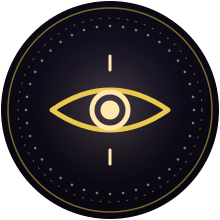
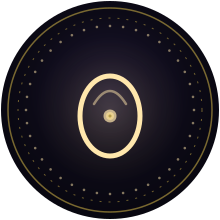
An eye gazes upon you, often the envious stare of the evil eye; guard yourself and wear a charm, for you are being watched.
Where it sits in the cup
At the rim the eye warns of short-lived gossip and glances; at the bottom of long-nursed envy; near the handle of someone in your closest circle; opposite it of a stranger watching from afar.
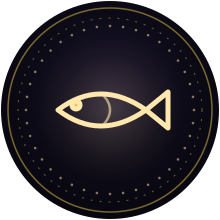
The fish is a great sign of fortune: abundant sustenance, plenty and prosperity flow to you, as the sea bestows its gifts upon the net.
Where it sits in the cup
At the upper rim the fish's prosperity comes soon, at the bottom it lies deeper and more lasting; by the handle your own wealth increases, opposite it the gain arrives from afar or through strangers.
A flower promises joy, a tender affection, or a gift of fate — perhaps the dawn of love, even a marriage to someone clever and fair.
Where it sits in the cup
At the rim the joy blossoms soon; near the handle it comes from a loved one at home, opposite from someone distant, and at the bottom it is affection that grows slow and deep.
The fox stands for cunning and a keen mind, yet it also warns you of a deception; a sweet-tongued liar circles you, so weigh the words that sound too lovely to be true.
Where it sits in the cup
At the rim the trickery is near at hand; at the bottom it is rooted in an old acquaintance, near the handle the sly one sits in your closest circle, and opposite among strangers.
An outstretched hand promises support and reconciliation; fate extends its help from where you least expect it, and a bond is sealed in peace.
Where it sits in the cup
At the rim the helping hand reaches soon, at the bottom it is rooted in old kinship, near the handle it is your own hand that gives or withholds, and opposite it comes from a stranger.
The heart speaks of love that fate has appointed for you — whether you fall or whether you are cherished, both are written into your portion as a gift.
Where it sits in the cup
Near the handle the heart means your own present love, opposite it an affection from afar or a stranger; at the rim it blossoms quickly, at the bottom it rests deep and lasting.
The horse heralds a wish fulfilled, strength and freedom; to see it mounted is a sign that honor and success beckon along your road.
Where it sits in the cup
High at the rim the horse's good news comes galloping fast, at the bottom stands a harder or more distant matter; by the handle its strength concerns your own striving, opposite it comes from strangers or afar.
The house promises shelter and a harbour where worries untangle; fate is leading you toward peace, family, and a steady roof over heart and home.
Where it sits in the cup
Near the handle the house means your own home and family, opposite it the dwellings of strangers; at the upper rim it signals a move or purchase soon, while at the bottom it speaks of an old home or distant roots.
The key opens a gate: a home of your own, a fresh departure, or a doorway of earnings that swings open to you by grace.
Where it sits in the cup
At the rim the door opens soon, at the bottom only after patient waiting; near the handle the key concerns your home, opposite it an opportunity coming from outside or from strangers.
The knife cuts a bond in two — separation or divorce; what was once joined, fate now severs with a sharp blade.
Where it sits in the cup
At the rim the break is imminent, at the bottom an old, deep feud smolders; near the handle it concerns your home, opposite it the cut comes through a stranger or foe.
The ladder shows a rise step by step; fate has smoothed your path upward, yet each rung must be climbed with care.
Where it sits in the cup
At the rim the climb begins now, at the bottom it leads from deep beginnings far upward; near the handle you rise in your own endeavor, opposite it the path opens in foreign lands.
A letter heralds long-awaited news; what you await in silence is already on its way to you, carefully sealed by fate.
Where it sits in the cup
Near the rim the letter arrives within days, at the bottom it concerns an old unsettled matter, near the handle it comes from a loved one, and opposite from a distant land.
The lion proclaims strength, leadership and courage; a victory in life and a fresh start await you, borne by your inner dignity.
Where it sits in the cup
High at the rim the lion's strength soon comes into its own, at the bottom it is a deep foundation or a hidden envy; by the handle it is your own power, opposite it a mighty stranger.
The moon whispers of love and romance, of beauty and the quiet joys of night. Beneath its silver light the heart opens to a tender meeting.
Where it sits in the cup
Near the handle the moon touches love in your own life, opposite it a romance with a stranger; at the rim it awaits in the next lunar cycle, at the bottom it is a deep longing long nurtured in secret.
The owl carries a solemn word, sometimes tidings of loss or parting; yet its wakeful gaze gifts you wisdom and bids you stay alert to your fate.
Where it sits in the cup
At the rim the owl's news arrives soon; resting at the bottom it touches old wounds or distant matters, and near the handle it speaks of a worry under your own roof.
The ring closes a circle: the start of a bond, a proposal or a marriage — and sometimes wealth that falls to you from a person of high rank.
Where it sits in the cup
Near the handle the ring promises a bond within your own home, opposite it one with someone distant; at the rim it is imminent, at the bottom still far off or wreathed in the past.
The scissors part two who were close — a firm, decisive farewell; fate cuts the thread once and for all.
Where it sits in the cup
At the rim the break is near, at the bottom the strife has long taken root; near the handle it cuts family ties, opposite it a connection to someone distant.
The ship carries you away from cares and sets sail toward new waters; fate opens a wide horizon where your deliverance awaits.
Where it sits in the cup
At the upper rim the ship heralds imminent news or arrival, at the bottom a distant, slow-ripening voyage; opposite the handle it comes from strangers across the sea, near the handle it concerns you and your own.
The snake warns of a hidden enemy, a cunning and treacherous person; guard your words against betrayal and whispering, for not everyone who smiles wishes you well.
Where it sits in the cup
Near the rim the snake's danger is imminent, at the bottom an old or deep-rooted enmity; by the handle the betrayer lurks in your closest circle, opposite it among strangers or far away.
A star is the gleam of your destined fortune in the sky of fate; a long-held wish will come true, and a light will show you the way.
Where it sits in the cup
At the rim the star foretells fortune soon, at the bottom a deep-rooted light of life; near the handle it shines over you and your home, opposite it over distant roads and new acquaintances.
The sun leads you out of darkness into light: cares burn away, and a new, radiant day of your life dawns. It is the hour of rebirth, when your fortune rises in full strength.
Where it sits in the cup
Near the handle the sun lights your own happiness and home, opposite it radiance comes through others; at the upper rim it shines soon, at the bottom it promises a life-light that rises late but unquenchable.
A sturdy tree foretells growth, firm standing, and an honored name rooted deep in your destiny; a withered tree gently counsels patience through a weary season.
Where it sits in the cup
At the rim the growth comes soon; near the handle it roots in your home, opposite it among strangers, and at the bottom it reaches far into the years ahead.
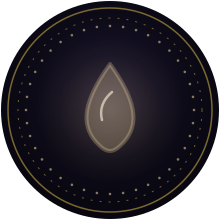
The acorn is a small seed carrying the promise of an oak: from humble beginnings fate lets health and plenty slowly rise.
Where it sits in the cup
At the rim the acorn heralds a small bit of luck soon to sprout, at the bottom a slow, steady growth over years; near the handle it flourishes at home, opposite the seed comes from outside.
The airplane calls you to set out on a journey; fate lifts you high and carries you over distant lands toward a loftier destiny.
Where it sits in the cup
High at the rim the airplane heralds a soon and far journey or a promotion, at the bottom distant plans still grounded; opposite the handle the flight leads abroad, near the handle someone returns home.
An angel in the grounds promises an unseen guardian watching over your fate; heed the heavenly guidance that gently steers your kismet toward the light.
Where it sits in the cup
Near the rim the guardian angel rushes swiftly to aid, at the bottom it watches over deep, distant life matters; by the handle it guards home and heart, opposite it the help arrives from a stranger or afar.
The apple is the fruit of health and ripened knowledge; fate hands you something already grown whole, inviting you to pluck it with gratitude.
Where it sits in the cup
At the rim the apple promises a reward soon, at the bottom a health or knowledge slowly ripening; near the handle the fruit concerns you and your home, opposite it arrives through stranger's hands.
The axe reveals a difficulty you must meet upright rather than evade; what you cut through with your own hand clears the road ahead, for fate hands you the blade but the swing is yours alone.
Where it sits in the cup
High at the rim the difficulties are nearly defeated, at the bottom they are deeply rooted and ask for more patience; near the handle you must clear a path within your own life, while opposite the handle an external obstacle must be felled.
A baby in the cup speaks of tender innocence and a pure beginning that asks for shelter and care; what is sprouting in you is still fragile, yet fate keeps watch over the small one.
Where it sits in the cup
Near the rim the baby heralds a joyful turn soon to come, at the bottom a deep-rooted or still-distant family matter; by the handle it touches your own home, opposite it the child or worry of another.
The purse heralds a large sum being placed into your hand; fate entrusts you with an abundance that is yours to keep and guard.
Where it sits in the cup
At the rim the money arrives or is at risk right away, at the bottom it concerns an inheritance or long-held savings; by the handle the purse touches your own household, opposite it money held in someone else's care.
The bear lends you strength and protection and promises great gain after hard toil; yet decide with care, for raw power must be guided by wisdom.
Where it sits in the cup
At the rim the test of strength or the journey is near; at the bottom it is rooted in long effort, near the handle the bear guards you at home, and opposite the challenge waits in foreign lands.
The little boat beckons toward an outing and adventure; on the horizon sways a journey that fate is drawing gently but surely nearer.
Where it sits in the cup
Near the handle the boat means a short outing with loved ones, opposite it a trip with strangers; high up it marks an imminent departure, at the bottom a small journey still ripening.
The book is a page that fate turns open for you: knowledge arrives, perhaps tidings from afar that light your path anew.
Where it sits in the cup
At the rim the book heralds news for the coming days, at the bottom an old truth or a long-kept secret; near the handle the writing concerns you, opposite it comes from strangers or afar.
A bridge carries you from the old into the new and joins two hearts across any chasm; fate offers its hand for the crossing.
Where it sits in the cup
At the rim the bridge announces a crossing soon; at the bottom a deep and lasting bond; near the handle a reconciliation within your own home; opposite it a bridge built toward someone far away.
The chain is a bond that links two fates: a betrothal or wedding draws near, link joining link as destiny has woven it.
Where it sits in the cup
At the rim the bond is imminent, at the bottom it is long-standing or runs deep; near the handle the chain ties you and your home, opposite it binds you to someone distant or a stranger.
The circle is the seal of completion: what you began closes into a whole, and a longed-for aim is fulfilled just as fate has promised.
Where it sits in the cup
At the rim the circle points to a near completion or a windfall, at the bottom to a long-held aim finally coming full; near the handle something completes within you and your home, opposite it the gain arrives from outside.
The clover is a sign of rich fortune and bounty; fate turns to you gently, and hope brightens the road before you.
Where it sits in the cup
At the rim the luck arrives soon; near the handle it blesses home and family, opposite it reaches you through strangers, and at the bottom a lasting, steady fortune takes root.
The coffin whispers of news that will weigh upon the heart, yet fate asks only that you receive it with dignity, for behind every closing a quiet door swings open.
Where it sits in the cup
Near the rim the coffin foretells news arriving soon, at the bottom an old grief still echoing; beside the handle it touches your own household, opposite it a distant person.
The coin foretells money already on its way to you and a debt about to be settled; fate balances what had been left open.
Where it sits in the cup
Near the rim the money flows in soon, at the bottom it sits as a distant or saved-up sum; by the handle it fills your own purse, opposite it comes from other people.
The bull heralds swelling wealth and a strength no storm can bend; the abundance fate has written for you draws near with slow, certain steps.
Where it sits in the cup
Near the rim, the wealth enters the house soon; at the bottom it rests as secured fortune or inheritance; by the handle your own estate grows, opposite it the gain arrives through strangers or distant trade.
The crescent opens a new page in the book of your life and gently releases you from the old. Like the young moon, something tender begins to grow that will one day shine full.
Where it sits in the cup
Near the handle the new beginning starts within yourself and your home, opposite it is set in motion from outside; at the rim the turning point is imminent, at the bottom it ripens slowly from deep roots.
The cross speaks of a victory won through hardship; yet it also carries a shadow of farewell, for a dear one may pass on, as fate decrees.
Where it sits in the cup
At the rim the trial is near and soon over, at the bottom it weighs heavily and runs deep, near the handle the sacrifice touches you or your home itself, and opposite the burden comes from outside.
The dagger whispers of a danger drawing near in secret and of a weariness that wears at your soul; beware false friends whose smiles conceal a blade, for fate cautions you softly before it speaks aloud.
Where it sits in the cup
At the rim the danger threatens at once, at the bottom an old betrayal lies buried whose effect still lingers; near the handle the stab comes from your closest circle, opposite the handle from a stranger you do not yet know.
The gazelle heralds a near marriage to a graceful, refined young woman; fate dresses your days in gentleness and noble beauty.
Where it sits in the cup
At the rim the tender meeting or news arrives soon; at the bottom a deep, lasting bond takes root; near the handle the gazelle touches your own heart and home, opposite it she comes as a stranger from afar.
A door swings open, and with it a gate of fortune that fate has unlatched for you; step through, for what waits beyond is prepared for you.
Where it sits in the cup
At the rim the door opens soon; at the bottom only after long waiting; near the handle within your own home and family life; opposite it through strangers or in a distant land.
The dots are scattered coins of fortune: where they cluster, earnings multiply, and with every speck busy activity and prosperity grow in your life.
Where it sits in the cup
At the rim the dots herald swiftly arriving gain or a near departure, at the bottom slowly ripening wealth; by the handle they concern your own money, opposite it income from afar.
The dove brings the long-awaited good tidings and, after a quarrel, lays the gentle hand of reconciliation upon your heart. Where it alights, peace settles in as if ordained from heaven.
Where it sits in the cup
Near the handle and high, the dove means peace within your own home and very soon; at the bottom an old reconciliation still ripens, and opposite the handle good news nears from a distant person.
The dragon stands for enmity, obstacles and a powerful adversary blocking your path. Yet it can also mean an encounter with great, influential people and a mighty transformation of your fate.
Where it sits in the cup
Deep at the bottom the dragon lurks as an old, deep-rooted conflict or a fundamental transformation; at the upper rim the change breaks in soon, and opposite the handle the powerful foe comes from outside, from afar.
The eagle carries weighty news upon its wings and grants you the wide, free view of your fate from on high. In the Ottoman reading it sometimes heralds an exceptionally beautiful bride or a stately groom.
Where it sits in the cup
Soaring at the upper rim, your ascent is crowned soon; resting at the bottom it marks a long road to the summit, and opposite the handle the lofty news comes from strangers or afar.
The egg cradles a hidden blessing within its shell: abundance, fertility and a fate still ripening, destined to break open in its appointed hour.
Where it sits in the cup
Near the rim the egg hatches soon, at the bottom its plenty is still distant; by the handle it touches your home and family, opposite it the increase arrives from outsiders.
The hat crowns a new standing: fate sets a different dignity upon your head, a role you have yet to grow into.
Where it sits in the cup
At the rim the new rank is imminent, at the bottom it ripens slowly from deeper roots; near the handle the dignity touches your own home, opposite it is bestowed by strangers or from afar.
The horseshoe is a seal of fortune and protection; a road of rescue opens and a long-cherished wish comes true, yet beware fair-weather friends who stand by you only in the sunshine.
Where it sits in the cup
At the rim luck beckons in the near term, at the bottom lasting prosperity grows from it, near the handle it shields you and your home, and opposite the blessing arrives through a journey or a stranger.
A letter is the first sound of a name that fate whispers to you — the initial of a person or a place woven into your story.
Where it sits in the cup
At the rim the letter names someone appearing soon, at the bottom an old or lasting bond; by the handle it means you or your kin, opposite it a stranger or someone far away.
Upright, clear lines are the rising paths of your longing; should they reach the rim, fate opens a luminous road upward for you.
Where it sits in the cup
High at the rim the lines show a journey starting soon, low at the bottom long, drawn-out roads; by the handle they concern your own life path, opposite it travels and paths among strangers.
The mountain is a lofty goal that belongs only to the one who dares the climb; hold fast to your aim, for the summit is nearer than it seems.
Where it sits in the cup
At the rim the climb is imminent, at the bottom it is a lifelong undertaking; near the handle the obstacle lies within yourself, opposite it rises from outer circumstances or another's resistance.
The mouse scurries through your cup as a two-faced person who harms you in secret. Sometimes, though, it means only gossip and the chatter of crowded gatherings, to which you should give no power over you.
Where it sits in the cup
Near the handle the mouse warns that the harm or thief comes from your own circle; at the upper rim the small loss looms soon, and deep at the bottom an old, stubborn worry gnaws at you.
A number is the measure of the hour in the book of fate: it names the span — a day, a month — until the promised thing comes to pass.
Where it sits in the cup
At the rim the number counts a few days to the event, at the bottom months or years; by the handle the span concerns you yourself, opposite it an event among strangers or far away.
The peacock spreads its fan and promises money from a source you did not expect, with beauty and splendor upon your path. Often it heralds a beautiful, dignified companion for life.
Where it sits in the cup
Resplendent high at the rim, splendor and unexpected riches come soon; at the bottom a lasting, deep-rooted prosperity rests, and opposite the handle the admiration or money comes from strangers.
The rabbit heralds a glad piece of news that will soon knock at your door, and sometimes the gift of new life. What you long awaited now comes toward you, light as a breath of your appointed fortune.
Where it sits in the cup
If the rabbit leaps at the cup's rim the good news arrives within days; resting at the bottom it concerns a distant, deep-rooted matter, and near the handle it touches your own home.
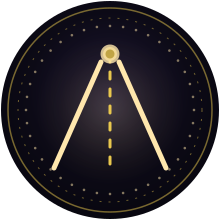
A road opens before you and fate invites you to take a step; what is written for you will arrive only once you set out.
Where it sits in the cup
At the rim the road means a journey or choice soon to come; at the bottom a long life-road; near the handle it leads homeward, opposite it toward far places and strangers.
The rooster crows out good news and proclaims the end of a hard time, as dawn ends the dark. Yet let it not crow too loud, for it sometimes points to one who sows discord among people.
Where it sits in the cup
Standing high at the rim with head raised, the glad tidings come swift and clear; low and dark at the bottom it warns rather of the troublemaker, and at the handle its crow concerns you and your home itself.
The rose foretells reunion with those you love and the easing of longing; its fragrance heralds a love that fate has caused to bloom for you.
Where it sits in the cup
At the rim love draws near; near the handle it blooms in your own heart and home, opposite it comes from someone far, and at the bottom rests an old, deep affection.
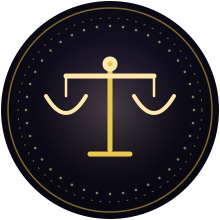
The scales promise that justice will prevail and a long-wavering matter will find its balance; what is rightfully yours will be measured out to you in fair portion.
Where it sits in the cup
At the rim the verdict is near, at the bottom the dispute drags on and reaches deep into the past; near the handle the scales concern your own affair, opposite it a stranger's quarrel, and the higher they float, the sooner the judgment falls.
The scorpion warns of a hidden danger and a secret enemy, yet its sting also carries fierce passion and the power of deep transformation.
Where it sits in the cup
At the rim the danger strikes soon; at the bottom an old grudge sits deeply rooted, near the handle the conflict looms within your own home, and opposite it comes from a distant enemy.
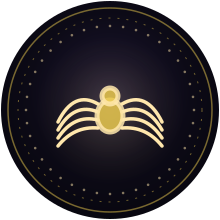
The spider warns of a trap or a toxic entanglement you might be caught in; yet whoever weaves their web patiently, as it does, may still reap a gain in the end.
Where it sits in the cup
At the rim the chance or the trap is spun soon; at the bottom an old entanglement lies deeply woven, near the handle the web concerns your own home, and opposite the windfall comes from a stranger's hand.
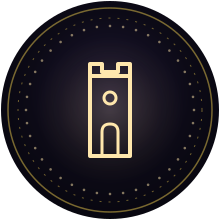
The square is the seal of shelter: your fate settles into firm, even walls, and within these four corners you find calm, order and a peace no worry can breach.
Where it sits in the cup
At the rim the square promises stability soon, at the bottom a lasting foundation; near the handle it protectively encloses your home, opposite the handle it marks the solid world of strangers.
The sword speaks of a courage forged within your heart and a trial you will pass with your head held high; the strength fate has apportioned you now gleams like a blade in the morning light.
Where it sits in the cup
At the rim the sword foretells a clash close at hand, at the bottom a deep-rooted fight carried from the past; near the handle the conflict concerns yourself and your home, while opposite the handle it comes from strangers or from afar.
A triangle heralds transformation and a fortunate turning point; with its apex upward fate lifts you higher, with it downward it counsels patience before your luck arrives.
Where it sits in the cup
At the rim the triangle promises a turn soon, at the bottom a deep-rooted or distant change; near the handle it touches you and your home, opposite it comes through strangers or from afar.
The turtle teaches you patience and quiet endurance, for what ripens slowly lasts long. It heralds at the same time news that is making its way to you from afar.
Where it sits in the cup
At the upper rim the turtle promises that patience soon pays off; deep at the bottom it is a long, steady ripening, and opposite the handle the awaited news nears from far away.
The umbrella is a heavenly shelter, a hand of mercy spread above you that turns evil away from your head; walk at ease, for you are watched over.
Where it sits in the cup
At the rim the sheltering umbrella arrives just in time for a near worry, at the bottom it marks a lasting, deep-set protection in life; near the handle the refuge comes from your own home, opposite it from a helping stranger, and the higher it floats, the sooner it opens.
The wolf warns you of people who hide their teeth behind a smile; keep your distance, for fate has placed them beside you as a test of your discernment.
Where it sits in the cup
At the rim the wolf warns of a rival drawing near soon; at the bottom it sits as an old, deep-rooted threat; near the handle the danger lurks within your own circle, opposite it among strangers far away.
The ant teaches toil, loyalty and quiet endurance; through persistent work the reward you deserve is granted you by fate.
Where it sits in the cup
At the rim the ant promises a near reward for recent effort, at the bottom the long building of a fortune; near the handle it speaks of diligence in your home, opposite it of work among strangers.
A balloon in the grounds heralds a celebration near at hand and a joy that lifts the heart skyward; what once weighed on you loosens and rises away on the wind. Kismet carries you out of the valley into brighter heights.
Where it sits in the cup
At the rim the celebration is already within reach; if the balloon sinks to the bottom the joy is distant and long-awaited; near the handle you celebrate within your own home, while opposite it the occasion arrives from afar or through unfamiliar guests.
The bat flies from darkness into light and heralds a change that frees you from an old fear.
Where it sits in the cup
At the rim the turn or warning draws near soon, at the bottom it sits deep and touches old matters; near the handle it concerns your own fear, opposite it the cunning of a stranger.
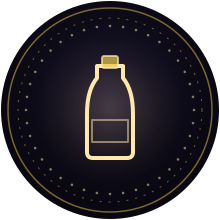
The bottle heralds hours of pleasure and festive company; fate will soon fill your cup to the brim with delight.
Where it sits in the cup
At the rim the bottle promises a celebration soon, while at the bottom it speaks of a long-held pleasure or old habit; near the handle the festivity is in your own home, opposite it the merriment beckons among strangers.
The chest holds a secret that fate is not yet ready to unlock; be patient, for what lies sealed today will be revealed as your portion when its hour arrives.
Where it sits in the cup
Near the rim the chest points to a secret about to open, at the bottom to something deeply buried in the past; by the handle it concerns your own home, opposite it the hidden affairs of strangers.
The bride in the cup carries welcome tidings and promises a festive new beginning; fate is dressing your life in a fresh and radiant garment.
Where it sits in the cup
At the upper rim the bride marks a near celebration or union, deep at the bottom long-cherished hopes or more distant plans; by the handle the joy is your own, opposite it more likely another's wedding.
The church calls you to a quiet hour of prayer and reflection, a solemn occasion drawing near in which the heart turns toward the divine.
Where it sits in the cup
At the rim the church urges imminent reflection before a decision, at the bottom a deep-rooted faith and a solemn event far off; by the handle it touches your inner peace, opposite it the solace that comes from others.
The clock in the cup promises abundant sustenance and a fortune that ripens at its appointed hour; what is written for you arrives at your door right on time. Trust the passage of time, for fate measures your days with a generous hand.
Where it sits in the cup
At the rim the clock urges prompt action and means days or weeks, at the bottom it speaks of a ripe fruit of time that falls only after years; near the handle the right timing concerns your own life and health, while opposite it the decisive moment hangs on a distant person or event.
The crab warns of someone dragging you down and of hardship in your working life; loosen the claw that holds your steps.
Where it sits in the cup
At the rim the obstacle pinches in the near future; at the bottom the stubborn resistance sits deep and old; near the handle the burden clings to your own life, opposite it the opponent comes from outside.
The cradle whispers of new life on its way; a child or a tender new beginning has been written into your portion by fate.
Where it sits in the cup
Near the rim the cradle announces glad news coming soon; at the bottom rests a long-held wish or a plan ripening slowly, and near the handle the new life touches your own home directly.
Behind this curtain, fate is quietly weaving something out of sight; a secret or a hushed arrangement waits for the moment it is meant to be revealed.
Where it sits in the cup
At the rim the curtain points to a revelation close at hand, at the bottom to a long-hidden secret; near the handle the concealed matter touches your home, opposite the handle it concerns the intentions of strangers.
The cypress stands for steadfastness, dignity and long life; upright as it is, you will pass through the years unbending.
Where it sits in the cup
At the rim the cypress foretells a steadfastness soon needed, at the bottom a strength grown over years; near the handle it is your own firmness, opposite it the dependable support of someone far away.
The devil in the grounds warns of someone secretly plotting evil against you; keep your heart pure, for fate unmasks every scheme in the end.
Where it sits in the cup
Near the rim the temptation looms soon, at the bottom an old, deep malice takes root; by the handle the danger lurks within your own home, opposite it springs from a stranger.
The dolphin brings joy, playfulness, a quick mind and faithful friendship; fate lets you glide through your days light of heart.
Where it sits in the cup
At the rim the saving joy or help draws near soon; at the bottom a deep, steady friendship takes root; near the handle the faithful helper comes from your own circle, opposite it as a well-meaning stranger.
The dragonfly heralds transformation, a self that sheds its old skin; what fate removes from you it returns in a lighter, more luminous form.
Where it sits in the cup
At the rim the dragonfly promises a soon, sudden turn; at the bottom a deep change that ripens slowly; near the handle it touches your own awakening, opposite it the shift comes through a stranger.
The duck invites you to feast and joy and foretells a pure, happy marriage blessed by fate.
Where it sits in the cup
At the rim the glad tidings or invitation swims nearer, at the bottom marital happiness takes deep root; near the handle the joy touches your home, opposite it comes from afar across the water.
The feather speaks of a lightened heart and of a message drifting down to you from the unseen; set aside what crushes you, for the hidden world keeps watch over you. A word, soft as a wingbeat, points the way to your next step.
Where it sits in the cup
At the rim a message glides toward you soon; at the bottom rests an old, forgotten word or a deep-seated distraction; near the handle the feather's greeting comes from a loved one, while opposite it comes from a stranger whose words you should weigh with care.
The flag flies above a victory drawing near; what you have long striven for will fall to you with honour and gain. Fate raises your banner high, and your name will be spoken with respect.
Where it sits in the cup
Near the rim the flag announces a triumph close at hand, while deep at the bottom it marks a lasting victory won through long struggle; by the handle the honour concerns you and your home, and opposite it the glory or warning comes from strangers far away.
The frog leaps unexpectedly and brings an exciting opportunity that turns your fate in a single bound; be ready to seize it.
Where it sits in the cup
At the rim the frog announces a chance already hopping at your door, at the bottom a hurdle rooted deep in your life; near the handle it concerns you yourself, opposite it comes through a stranger.
A garden in the cup heralds a season of blossoming: encounters and doorways open before you like buds, and your fate is readying fertile ground for whatever your heart longs for.
Where it sits in the cup
Near the rim the garden blooms soon, at the bottom it roots a long and lasting growth; by the handle it is the garden of your own home, opposite it a fortune arriving from afar or from strangers.
The giraffe cautions you to beware those who wish to use you for their own ends; look far and see through their intent.
Where it sits in the cup
At the rim the wide vista or warning appears soon; at the bottom it is a long-term life foresight; near the handle it concerns your own far-seeing, opposite it those distant ones who would exploit your height.
The grape, ripened on the vine, announces the coming of material gifts; fate fills your hands with the sweetness that grew patiently in the sun.
Where it sits in the cup
At the rim the grape promises gain soon and festivity near, at the bottom a wealth that ripens long; near the handle you celebrate in your own circle, opposite it riches arrive from afar.
The grave seals the end of a chapter, a word at last spoken, a burden finally laid down; honour what has been, for fate buries only to ready fresh soil for the seed.
Where it sits in the cup
At the bottom the grave marks deep roots and a distant matter laid to rest, at the rim an imminent turning point; near the handle the ending concerns you yourself, opposite it a stranger or a far-off place.
A sudden quarrel draws near, and danger waits in the direction the barrel points; yet whoever reads the sign may step aside from fate's shot.
Where it sits in the cup
At the rim the gun warns of a quarrel in the coming days, at the bottom of an old enmity with deep roots; near the handle the danger aims at your home, opposite it at a stranger, and the higher the barrel, the sooner the shot.
Like a kite lifted higher by the wind, you will rise through the hands of others; hold a wish in your heart, for fate is leaning toward its granting.
Where it sits in the cup
High at the rim the kite climbs quickly and the rise is near; lower down it asks for patience; near the handle the lift comes from your inner circle, opposite the handle from distant or new connections.
The lamp is the light that reveals truth and lights your path; a hidden guidance leans toward you, showing the door that fate is opening.
Where it sits in the cup
At the rim the lamp illuminates a truth about to surface, at the bottom a long-hidden knowing; near the handle its glow falls on your own heart and home, opposite it casts light on a stranger or a distant matter.
The lily marks a pure soul and a long, blessed life, one to which fate has granted dignity and peace.
Where it sits in the cup
At the rim the lily promises a purity about to blossom, at the bottom a peace rooted across a lifetime; near the handle it is your own virtue, opposite it the goodness of another.
The lute foretells glad news and a celebration: soon a sweet melody will rise in your life, and fate is tuning the strings of your heart to joy.
Where it sits in the cup
At the rim the joyful tune sounds soon, at the bottom it is a deep, long-lasting gladness; near the handle you celebrate in your own home, opposite it the music arrives with guests or word from afar.
A man of consequence enters your fate, sent by kismet; from this meeting may grow protection, support, or a turning of your road.
Where it sits in the cup
At the rim the man means a meeting soon; settled at the bottom he is an old acquaintance or a distant fate, near the handle he belongs to your household, opposite it he is a stranger.
The monkey warns you: someone is playing a double game and seeks to deceive you; open your eyes before fate puts you to the test.
Where it sits in the cup
At the rim the deceit threatens in the near term, at the bottom an old, deeply woven trickery lies; near the handle the flatterer comes from your own circle, opposite it from a stranger.
The net warns of a snare: certain people wish to entangle you in dubious dealings; test every hand stretched toward you before you take it.
Where it sits in the cup
At the rim the trap is freshly set and easily avoided, at the bottom an old, deep-rooted entanglement wraps around you; near the handle the net comes from your own circle, opposite it from strangers, and the deeper it lies, the harder it is to tear.
The olive branch foretells the hushing of old quarrels; fate lays peace upon your heart like dew upon the leaf. What was long heavy now finds its gentle rest.
Where it sits in the cup
Near the handle the olive branch soothes a rift in your own home, opposite it with someone distant; at the rim peace comes soon, at the bottom an old, deep-rooted enmity heals.
The palm announces rising fortune and steadfastness, honor and a victory that fate grants you after patient growth.
Where it sits in the cup
At the rim the palm promises a hard-won success soon, at the bottom a triumph that took long to root; near the handle it is your own perseverance, opposite it recognition arriving from afar.
The pear promises comfort and a prosperous life, where kismet ripens your days into something sweet and abundant.
Where it sits in the cup
At the rim the pear heralds prosperity soon, at the bottom a slow-ripening contentment; near the handle it feeds your own home, opposite it the bounty arrives through strangers.
The pearl is patience rewarded: a hard task will be brought to completion, and fate crowns your endurance with a quiet, precious radiance.
Where it sits in the cup
At the rim the pearl gleams as a reward close at hand, at the bottom a gain still ripens; by the handle it is a treasure within your own life, opposite it comes through another's hands.
The pomegranate, housing a thousand red seeds within its rind, is the sign of abundance and fertility; fate promises a life that multiplies like its grains.
Where it sits in the cup
At the rim the pomegranate heralds abundance soon, at the bottom a fertility that takes root and feeds generations; near the handle it blesses your own home, opposite it the plenty spreads far away.
The rainbow is the radiant promise after the rain, a sign that fate is leaving hardship behind you and hope is blooming anew.
Where it sits in the cup
At the rim the good turn arrives very soon, at the bottom it comes as lasting peace after a long trial; near the handle it brings reconciliation to your home, opposite it joy from afar or through someone new.
The raven croaks of envy and hidden sorcery and heralds heavy news; guard your heart against grudging eyes.
Where it sits in the cup
At the rim the ill news or envy nears soon, at the bottom an old, deep grudge rests; near the handle the spite is aimed at you yourself, opposite it comes from someone far off.
The seahorse promises that a long-cherished wish of the heart will at last come true; fate carries it gently to you across still water.
Where it sits in the cup
At the rim the wish is fulfilled soon; at the bottom it ripens slowly from a deep, old longing; near the handle it concerns your own heart and home, opposite it the fulfillment reaches you from afar.
The sheep foretells sustenance, glad tidings and perhaps a new child; if it describes a person, it speaks of gentleness and submission.
Where it sits in the cup
At the rim the good sustenance or news nears soon, at the bottom prosperity takes deep root; near the handle the sheep concerns your home and your own gentleness, opposite it a docile person from afar.
The sickle carries a sorrowful message and reminds you that every harvest is also a farewell; what has ripened is now cut so that new things may grow, so grieve gently and know that fate weaves meaning even into letting go.
Where it sits in the cup
At the rim a farewell is close at hand, at the bottom an old loss still echoes; near the handle the cutting touches an affair of the heart, while opposite the handle a tie to distant people or places comes to an end.
The suitcase heralds departure and journey; fate is repacking your paths and carrying you across the threshold into a land that awaits you.
Where it sits in the cup
At the rim the suitcase promises a near departure, at the bottom a distant or long-postponed journey; by the handle the travel concerns yourself and your home, opposite it leads far away toward strangers.
A table foretells a gathering where hearts meet around a board that fate itself lays; soon those you love will draw close around you.
Where it sits in the cup
At the rim the invitation is near; settled at the bottom it speaks of distant kin or a long-awaited reunion, and near the handle the table is set within your own home.
The throne heralds a rise into honor and dignity, fate lifting you toward a seat that was written for you long ago.
Where it sits in the cup
At the rim the throne promises a near promotion or recognition, at the bottom a long-awaited rank that is ripening; by the handle it concerns your own dignity, opposite it power held in another's hand.
The tiger shows how the reckless conduct of those around you pushes you into a perilous place; walk watchfully and do not leave your fate in another's hands.
Where it sits in the cup
At the rim the threat erupts soon; at the bottom the danger has been long fed and heavy; near the handle the clawed hand comes from your own house, opposite it from a powerful stranger.
The whale carries the sea upon its back and heralds a wide, brimming abundance; what is written for you arrives vast and overflowing.
Where it sits in the cup
At the rim the whale promises a coming wave of fortune, at the bottom a deep-rooted, lifelong abundance; near the handle its riches touch your home, opposite it they reach you from afar across the seas.
The wheat ear, heavy and golden, is the reward of your toil; fate bends the stalk toward you and says the harvest of your days will be blessed.
Where it sits in the cup
At the rim the reward ripens quickly, at the bottom it grows from deep, steady labor; near the handle the wheat fills your own granary, opposite it the harvest feeds strangers and distant tables too.
A woman of significance enters your life; by where she stands she grants you joy and grace, or stirs a hidden rivalry.
Where it sits in the cup
At the upper rim the woman foretells passion soon, deep at the bottom lie envy or a long-held bond, near the handle she is familiar to you, opposite it she stays a stranger.
Coffee cup symbol dictionary: your questions answered
How do I look up a symbol in this dictionary, and is it really free with no sign-up or app?
Yes, it is free. No registration, no account, no download: the dictionary runs in your browser, and no app is needed. It holds 130 coffee cup symbols, and each one has its own detail page. If you can name the shape, type it into the search box. The search matches symbol names in all site languages, so you can type it in Turkish, Arabic, Persian, Greek, Russian or German and still land on the right entry. If you cannot name it, browse the 11 categories instead: animals, objects, nature, travel, mystic, shapes, people, love, celestial, money and letters. Every entry gives you three separate meaning texts, Ottoman-Persian, Russian-Bulgarian and German/Central-European, switchable with the tradition toggle, plus a note on where in the cup the symbol sits. No talent or gift is required, and you do not need a paid reader. The site exists in 11 languages with proper right-to-left layout for Arabic and Persian. For two shapes sitting side by side, see the combinations page; for background, the knowledge hub and glossary.
Can I read my coffee cup from a photo, and how do I take a usable picture?
Yes. Working from a photo is the normal modern way to do this. You do not have to hand your cup to anyone, and you do not have to decide everything before the grounds shift. Shoot in bright indirect daylight, without flash, and make sure no shadow from your hand or phone falls into the cup. Wipe the outside first, then tilt the cup so the inner wall is visible from the rim down to the base. Take several pictures rather than one: the inner wall near the rim, the base looking straight down, and the handle side, since the handle is your orientation anchor for the zones. A photo freezes the cup, so you can compare shapes against the 130 entries at your own pace instead of on the spot. Then work back into the dictionary: spot a shape, search it in your own language or browse the 11 categories, and read the three traditions and the position note. A photo does not make a reading truer, and a dark or blurry one just hides the shapes. All of it is free, with no account and no app install.
I only see blobs, or my shape is not one of the 130. What should I do?
That is the normal starting point, not a failure. Most cups are mostly formless residue, and not every speck is a symbol. Begin with the two or three largest, clearest shapes and ignore the small flecks; a cup does not need many symbols to be readable. Look at the outline rather than the detail, turn the cup, hold it further away or narrow your eyes. A rough resemblance is enough, because your brain completes shapes on its own. For a shape you cannot name, reduce it to a basic form, a line, dot, circle, triangle, cross or square, then decide the family, animal, object, celestial or shape, and browse that category filter instead of searching. If the search returns nothing, try the name in another site language, use a simpler everyday word, or switch to browsing. Modern objects such as a phone, plane, car or bicycle have no traditional precedent, so treat them as your own association rather than tradition. And it is entirely legitimate to leave a shape unread. An almost empty or uniformly very dark cup is an observation about the whole cup, not a missing symbol.
Does it matter where in the cup a symbol sits, and when is it supposed to happen?
Position changes the emphasis. Our four zones are the rim for the near future, the middle for the present, the base for the distant or hidden, and the handle for yourself and your home. Find the handle first, since it anchors everything, then work from the rim downwards so the nearer time is read first. The same symbol in a different zone shifts the emphasis, not its identity: a travel symbol at the rim reads as something close at hand, the same shape at the base reads as something long-held or still out of sight. Timing here is relative, a near-to-far scale rather than a calendar. Some traditions quote fixed windows, a week, a month, or the widely used forty days, and those are conventions inside those traditions, not measurements. Some traditions also use a left/right axis measured from the handle, or read the saucer as a separate surface for the household. You will meet both elsewhere; neither is part of our zone model. Two symbols close together are read as a pair, which is what the combinations page is for. Note the zone before you look up the meaning.
Why does the same symbol mean something different here than on other sites?
Because there is no single canon. Coffee reading is oral tradition, carried by families and regions, so meanings drifted apart instead of being standardised. We name three schools openly, Ottoman-Persian, Russian-Bulgarian and German/Central-European, and every symbol carries a separate meaning text for each, switchable with the tradition toggle. The divergence is real: a protective household sign in one school can read as a warning to watch your own circle in another, and the reader who only ever sees one text never learns the second reading exists. You will also meet a flat contradiction about clarity. Some sources hold that a faint sign is the gentler one and a sharply drawn one the heavier; others hold exactly the opposite. That comes from different schools, and we do not adjudicate it. The practical rule is to pick one tradition and stay inside it for a whole cup rather than mixing meanings, then use the toggle afterwards to compare. Comparing shows how the same image travelled between cultures. That is cultural insight, not a test of which one is true.
How often can I read, can I read for someone else, and what if I see a bad symbol?
Custom, not law: one cup per question, and let time pass before asking the same thing again. A week is the interval most often quoted. Do not re-read the same cup over and over, and do not brew a second one hoping for a nicer answer. That habit is exactly what the tradition itself warns against. Hold one clear question in mind before you drink, one intention per cup; vague questions produce vague readings. Reading for other people is traditional and perfectly fine, and the etiquette is to stay kind: never tell someone about illness, death, a break-up or money loss. So-called bad symbols are warning imagery inside a tradition, not forecasts. Read the whole cup, look at the neighbouring shapes and the zone before you fix a meaning to one frightening sign. Nothing in a cup obliges you to do anything, and if a reading is making you anxious, the right move is simply to stop reading. If something you saw is genuinely worrying you, talk it over with someone you trust.
Is coffee cup reading real, and does it have any scientific basis?
No. There is no scientific evidence that coffee grounds reveal the future. The residue settles by chance as the liquid drains and dries, and people reliably recognise faces, animals and objects in random patterns. The meaning comes from the interpretive tradition and from the reader's own associations, not from the coffee. Readings still feel accurate, and there is a plain reason for that: the images are open and broadly applicable, so the person listening fills in their own situation, their own worry, their own name for the figure at the rim. What coffee reading actually is, is a centuries-old social practice, a structured occasion to sit with one question and talk it through over a cup. We publish it as cultural heritage and as entertainment, and we make no promises about outcomes. That does not make the dictionary useless. It documents what these images meant to people across three traditions, and it stays a useful cultural reference whether or not you believe a word of it.
Is coffee cup reading haram or a sin? What do religious traditions say about it?
We are not a religious authority and we issue no ruling. We can only report what different traditions say. In Sunni discussion, many scholars and fatwa bodies classify fortune-telling as forbidden because it claims knowledge of the unseen, and a well-known hadith about prayers not being accepted for forty days is regularly cited in that context. Among Shia authorities, several likewise deny divination any religious validity, while some treat a purely light-hearted practice differently where no money changes hands and nothing else forbidden follows. That difference from the Sunni position is real, and we would rather name it than smooth it over. In the Christian and Central-European context, churches have long rejected fortune-telling, and as a matter of history rather than religion, the practice was banned in Germany under the Nazi regime. Our own framing is straightforward: this dictionary documents a cultural tradition and is offered as entertainment, and nothing here is presented as knowledge of the future. If you are unsure, follow your own conviction or ask a scholar you trust. Nobody is obliged to use this site.
Can I just upload a photo of my cup and get a free reading instead of looking up every symbol myself?
Yes. On the home page of this site there is a free cup reading: take or upload photos of your cup and you get an interpretation back. No account, no sign-up, nothing to install. You can pick which tradition it reads in - the same three schools as the dictionary: Ottoman-Persian, Russian-Bulgarian and German/Central-European. Two honest notes. First, this is entertainment and tradition, not prediction, and the result is only as good as the picture: a dark or blurry photo gives a poor reading. Second, the reading is made by AI, so your photos are transmitted to our AI provider Anthropic (the Claude API), and that processing may take place in the USA. We do not store the photos permanently - they are used to create the reading, and that is all. If you share your result, only the reading text is saved under a random link id, without the photo. The privacy page has the details. Afterwards, look the individual symbols up here in the dictionary.
Books & Literature
Affiliate disclosure: as an Amazon Associate we earn from qualifying purchases. The price stays the same for you.
200 Symbolerklärungen zum Kaffeesatzlesen: Wahrsagen aus dem Kaffeesatz mit 200 Symbolen leicht erklärt
Beginner
Andrea Celik · 2018 · German
A practical reference of 200 explained symbols, ideal for beginners who want to read their coffee grounds sign by sign.